Investing in commercial actual property (CRE) is a time-tested approach for constructing wealth, generating profits, and diversifying investment portfolios. This complete guide delves into the various factors of business actual property investing, offering insights and strategies for beginner and professional traders.
Understanding Commercial Real Estate
Commercial real property refers to homes used for commercial enterprise purposes. This consists of various property types, including office homes, retail centers, business warehouses, multifamily apartment homes, hotels, and unique-cause buildings like self-garage facilities and scientific centers. Unlike residential actual estate, which primarily serves as housing, CRE is supposed to generate income from condo earnings or capital appreciation.
Types of Commercial Real Estate


Office Buildings: These range from single-tenant houses to skyscrapers housing multiple agencies. Office buildings are classified into Class A, B, and C based on location, age, and pleasantness.
Retail Properties: This class includes purchasing department shops, strip centers, and standalone stores. Retail houses rely heavily on patron spending and vicinity.
Industrial Properties: These encompass warehouses, production facilities, and distribution centers. Industrial residences have seen improved demand because of the upward thrust of e-commerce.
Multifamily Properties: Apartment complexes and high-upward thrust condominiums fall underneath this class. They are famous for their ability to generate consistent condominium profits.
Hospitality Properties: Hotels, accommodations, and accommodations are blanketed here. The fulfillment of those homes is closely tied to tourism and business travel.
Special-Purpose Properties: These are properties designed for a selected use, together with self-garage gadgets, car washes, and scientific workplaces.
Advantages of Investing in Commercial Real Estate
Income Potential: CRE regularly gives a better earnings capacity than residential houses. The rentals are usually longer, making sure of a consistent cash glide.
Appreciation: Over time, commercial houses can appreciate significantly, presenting sizeable returns on investment.
Diversification: Adding CRE to an investment portfolio can diversify the threat, as it frequently behaves otherwise from shares and bonds.
Tax Benefits: Investors can take advantage of various tax deductions, including depreciation, mortgage interest, and running charges.
Professional Relationships: CRE tenants typically keep the assets and ensure timely rent bills, mainly to fewer control troubles.
Risks Associated with Commercial Real Estate
Market Volatility: Economic downturns can decrease occupancy prices and decrease condominium earnings.
High Entry Costs: The initial investment in CRE is usually better than residential properties, requiring massive capital.
Management Intensive: Managing commercial houses can be complicated and time-consuming, often requiring professional asset control services.
Financing Challenges: Securing financing for commercial residences can be incredibly hard and usually includes better interest fees and shorter mortgage terms.
Vacancy Risks: Longer vacancies can occur in CRE compared to residential residences, especially during economic downturns.
Steps to Invest in Commercial Real Estate
1. Education and Research
Before diving into CRE funding, teaching yourself approximately the market is vital. This consists of know-how of the one-of-a-kind types of houses, market trends, and economic signs that affect the CRE market. Reading books, attending seminars, and following enterprise publications can offer valuable insights.
2. Define Investment Goals
Clearly outline your investment desires, including the favored go-back on funding, risk tolerance, and funding horizon. This will assist in selecting the right kind of property and investment method.
3. Financial Preparation
Ensure you’ve got the necessary capital for the funding. This includes the down fee, closing fees, and reserves for belongings enhancements and renovation. Evaluate your creditworthiness, as this may affect your potential for stable financing.
4. Property Search and Analysis
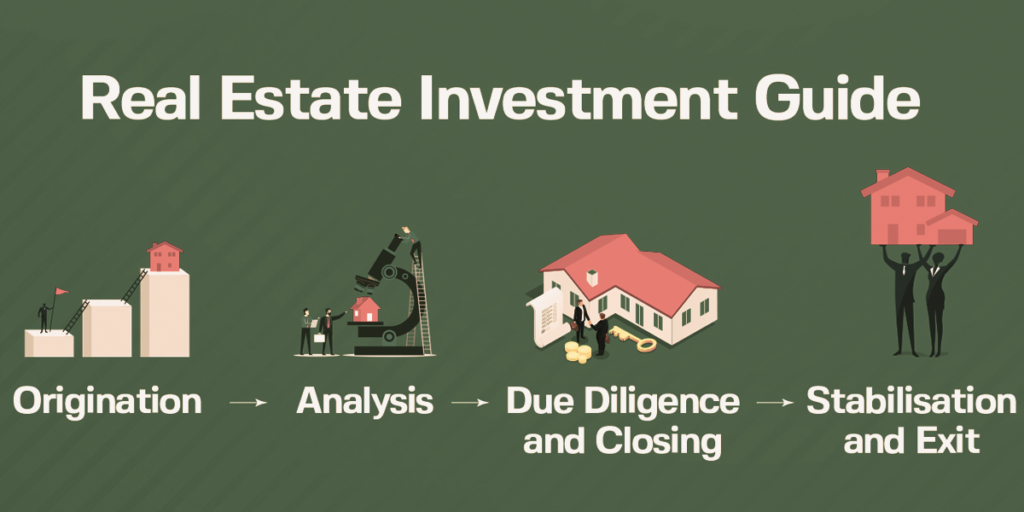
Conduct a radical search for residences that align with your investment goals. Analyze the ability of residences based on the vicinity, circumstance, tenant mix, and overall economic performance. Utilize equipment like comparative marketplace evaluation (CMA) and financial metrics, including cap charge, cash-on-cash return, and inner charge of return (IRR).
5. Due Diligence
Perform due diligence to evaluate the assets’s condition and capability risks. This consists of property inspections, reviewing lease agreements, analyzing economic statements, and expertise in zoning guidelines and environmental troubles.
6. Financing
Secure financing for the property. Explore distinctive financing alternatives, along with traditional bank loans, commercial loan-sponsored securities (CMBS), private lenders, and actual estate syndications. Understand the terms and conditions of the mortgage, such as hobby rates, repayment schedules, and covenants.
7. Acquisition and Closing
Once financing is secured, continue with the acquisition. This entails negotiating the purchase agreement, finalizing due diligence, and completing the last procedure. Engage specialists along with real property lawyers, brokers, and accountants to ensure a smooth transaction.
8. Property Management
Effective property control is critical to maximizing returns on CRE investments. This includes tenant acquisition and retention, lease control, maintenance, and monetary reporting. Consider hiring a professional property control employer if you need more expertise or time to manipulate the belongings.
9. Monitor and Optimize
Regularly display the performance of your investment. This includes tracking occupancy quotes, condominium profits, costs, and marketplace tendencies. Make vital adjustments to improve the assets’s overall performance, including upgrading centers, renegotiating rentals, or refinancing the belongings.
Investment Strategies in Commercial Real Estate
1. Core Strategy
The middle strategy includes investing in outstanding, well-positioned residences with solid income and coffee threat. These properties are usually completely leased to creditworthy tenants and require minimal control. The cognizance is on lengthy-time period capital protection and steady earnings technology.
2. Core-Plus Strategy
Core-plus homes are similar to core homes but require a few improvements or hire-up to maximize returns. These residences offer a stability of stability and boom capability, with barely higher threat and return compared to center homes.
3. Value-Add Strategy
The value-added method includes obtaining underperforming homes and improving costs through renovations, rent-up, and advanced management. This strategy offers better returns but has elevated chances and requires extensive knowledge and capital.
4. Opportunistic Strategy
Opportunistic investments contain high-threat, excessive-praise homes that require substantial repositioning or improvement. These houses may be vacant, distressed, or in emerging markets. The capacity for good-sized returns is high, but so is the threat.
Conclusion
Investing in business real property may be a profitable mission, offering the potential for significant earnings and capital appreciation. However, it requires careful plans, thorough research, and diligent management. By providing information on the marketplace, defining transparent funding dreams, and adopting appropriate strategies, buyers can navigate the complexities of CRE and gain lengthy-term success. Whether looking for stable profits via center residences or for high returns through value-added and opportunistic investments, commercial actual property offers various opportunities to construct and diversify your funding portfolio.