Introduction
In recent years, there has been a paradigm shift in the funding panorama, with more and more traders looking to align their monetary dreams with their moral and social values. Impact-making an investment has emerged as an effective device to reap this alignment, allowing buyers to generate economic returns while simultaneously creating tremendous social and environmental effects. This essay explores the idea of impact investing, its evolution, standards, challenges, and the position it plays in fostering sustainable development.
Understanding Impact Investing
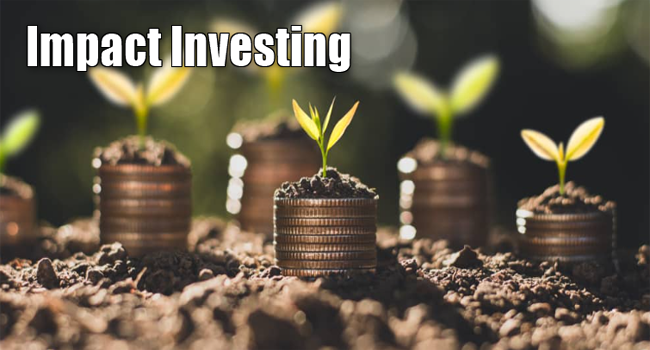
Impact investing is making investment capital to generate measurable social and environmental impact alongside financial returns. Unlike traditional kinds of investing, which prioritize economic benefit in particular else, impact investing seeks to address pressing societal and environmental challenges while handing over aggressive returns to investors. It represents a departure from the belief that economic fulfilment and social obligation are jointly one of a kind, as a substitute emphasizing the potential for income and purpose to coexist harmoniously.
Evolution of Impact Investing
- The roots of impact investing may be retraced to the early 20th century, with the established order of socially responsible investing (SRI) finances that screened out investments in industries deemed harmful to society, which include tobacco or weapons production. However, effect investing began gaining traction in the late 20th and early 21st centuries as a beautiful investment technique.
- The term “impact investing” was coined in 2007 by the Rockefeller Foundation, pivotal in popularizing the concept. Since then, the sphere has seen an exponential increase, fueled by increasing calls from traders searching to align their portfolios with their values. Today, effect investing encompasses a variety of asset instructions, such as private equity, mission capital, constant earnings, and public equity, with investments made throughout sectors, including healthcare, education, renewable energy, and less costly housing.
Principles of Impact Investing
In its middle, impact investing is guided by a hard and fast of ideas that distinguish it from different types of funding. These standards, often called the “triple bottom line,” require investments to supply measurable social, environmental, and monetary returns. Critical standards of effect investing consist of the following:
Intentionality: Impact investors proactively seek possibilities to generate high-quality social and environmental effects via their investments, aligning their capital with their values and goals.

Measurable Impact: Impact investments are expected to produce quantifiable results that contribute to high-quality social or environmental trade, permitting buyers to tune and assess the effectiveness of their investments.
Financial Viability: Impact investments must be financially sustainable, delivering competitive returns to buyers while mitigating dangers associated with impact-targeted ventures.
Additionality: The impact trader aims to catalyze pleasant exchange via financing initiatives or corporations that could no longer otherwise get hold of investment from conventional resources, thereby growing new opportunities for social and environmental impact.
Challenges and Criticisms
- Despite its speedy increase and capability for high-quality trade, effect investing faces numerous challenges and criticisms that warrant consideration. One of the first challenges is the need for universally regularly occurring standards for measuring and reporting impact, making it hard for traders to evaluate their investments’ effectiveness accurately. Additionally, there may be a risk of “effect washing,” wherein investments are advertised as socially responsible without handing over significant effect, leading to scepticism and mistrust within the enterprise.
- Furthermore, some critics argue that effect investing prioritizes financial returns over social or environmental effects, diluting its effectiveness in driving excellent trade. Others query the scalability and scalability of effect-targeted ventures, raising concerns about their potential to cope with systemic problems on a significant scale. Despite those demanding situations, proponents of impact-making investment remain constructive about its ability to mobilize capital toward sustainable improvement goals.
Role in Sustainable Development
- Impact investing is critical in advancing sustainable improvement by channelling capital toward initiatives that deal with urgent social and environmental demands. By leveraging the strength of markets and finance, impact traders can guide innovative solutions to poverty, inequality, weather exchange, and access to healthcare and education. Moreover, the effect of investing can liberate new sources of capital for underserved markets and marginalized communities, riding inclusive monetary growth and empowerment.
- Through targeted investments in regions such as renewable power, sustainable agriculture, and low-cost housing, effect traders can help build resilient and equitable societies, even producing monetary returns for their stakeholders. Moreover, impact-making an investment can function as a catalyst for effective alternatives within the broader funding atmosphere, encouraging more transparency, duty, and stakeholder engagement.
Impact Investing in Practice
To illustrate the concepts and effect of impact-making, an investment in practice permits a hypothetical case observation to be considered.
Case Study: Solar Energy Access in Sub-Saharan Africa
In Sub-Saharan Africa, access to reliable energy remains a vast assignment, with tens of millions dwelling without entry to energy grids. This lack of entry hinders monetary improvement and limits education, healthcare, and social empowerment possibilities. Recognizing the capacity for effective investing to cope with this difficulty, a collection of buyers decides to allocate capital in the direction of sun energy projects within the location.
Intentionality: The traders are pushed through a desire to enhance energy access and decrease carbon emissions in Sub-Saharan Africa. They actively seek opportunities to put money into solar energy groups, with a validated song file of turning off-grid solutions to underserved groups.
Measurable Impact: The effect buyers paint closely with their investees to set up clean metrics for assessing their investments’ social and environmental impact. The song signs consist of the various families electrified, greenhouse gas emissions avoided, and economic blessings generated for nearby communities.
Conclusion
Impact-making an investment represents a transformative technique to finance that seeks to align profits with motive, harnessing the electricity of capital to pressure effective social and environmental alternatives. As the sector continues to adapt, it’s critical to deal with key challenges, including impact measurement, transparency, and scalability, to maximize its capacity for impact. By embracing the ideas of intentionality, measurability, and economic viability, influential investors can play a pivotal role in advancing sustainable development and creating a more just and equit