Effective stock management is crucial for producers to ensure clean operations, reduce charges, and meet consumer demand. Implementing quality practices can notably improve efficiency and profitability. This guide outlines vital techniques for managing inventory correctly.
Understanding Inventory Management
What is Inventory Management?
Inventory control includes overseeing and controlling the ordering, garage, and components an organization uses to produce the objects it sells. It additionally comprises managing the portions of finished products for sale.

Importance of Effective Inventory Management
Effective stock control prevents stockouts, reduces excess inventory, and ensures the production technique runs smoothly. It immediately influences a producer’s ability to fulfil customer demand and maintain operational performance.
Setting Up an Inventory Management System
Choosing the Right Inventory Management Software
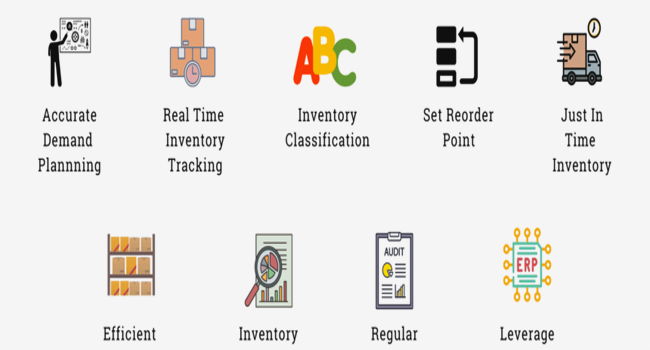
Step one toward green inventory control control is selecting an appropriate software program. The software must provide functions like real-time tracking, automatic reordering, and integration with other enterprise structures.
Implementing a Barcoding System
A barcoding system complements accuracy and performance in tracking stock. It simplifies recording inventory actions and reduces errors associated with access to guide facts.
Establishing Clear Inventory Policies
Defining clear inventory policies, such as reorder points, protection inventory levels, and lead instances, ensures consistency and forestalls confusion. These policies should be communicated throughout the organization. Demand Accurately
Analyzing Analyzing Data
Utilizing income facts enables forecasting future demand as it should be. Manufacturers can pick out trends and styles, taking into account better stock-making plans.
Using Advanced Forecasting Techniques
Incorporating superior forecasting techniques, such as device learning algorithms and predictive analytics, can improve the accuracy of forecast calls. These techniques must remember different factors, marketplace trends, or economic indicators.
Collaborating with Sales and Marketing Teams
Collaboration between the stock control team and income and marketing departments guarantees that calls for forecasts are aligned with promotional activities and market campaigns.
Implementing Just-In-Time (JIT) Inventory
Understanding JIT Principles
Just-In-Time (JIT) inventory is an approach where substances are purchased and produced most effectively as wanted. This technique minimizes minimizesding costs and decreases waste.
Benefits of JIT Inventory
JIT inventory reduces excess stock, lowers storage charges, and improves cash to go with the flow. It additionally encourages a more tremendously responsive and flexible production technique.
Challenges of JIT Inventory
Implementing JIT stock calls for unique call for forecasting and a reliable delivery chain. Any disruptions inside the delivery chain can lead to manufacturing delays.
Maintaining Optimal Inventory Levels
Calculating Economic Order Quantity (EOQ)
Economic Order Quantity (EOQ) is a formula used to determine the most appropriate order amount that minimizes inventory fees, including ordering and retaining costs. Calculating EOQ helps retain optimum stock degrees.
Setting Reorder Points
Reorder factors are predetermined ranges of inventory at which new orders are placed. This guarantees that stock is replenished before it runs out, stopping stockouts.
Managing Safety Stock
Safety inventory acts as a buffer against uncertainties in calls for and deliveries. Maintaining suitable protection inventory tiers helps in averting disruptions within the production method.
Leveraging Technology for Inventory Management
Utilizing Utilizingquency Identification (RFID)
RFID era uses electromagnetic fields to identify and track inventory tags routinely. This generation improves stock visibility and accuracy.
Implementing Internet of Things (IoT) Devices
IoT gadgets can display real-time inventory degrees and offer facts on storage situations. This technology complements inventory control by supplying actionable insights.
Adopting Artificial Intelligence (AI)
AI can examine large datasets and become aware of styles that aren’t apparent. AI-pushed stock management answers can optimize and predict destiny demand accurately.
Enhancing Supplier Relationships
Building Strong Supplier Partnerships
Developing robust relationships with suppliers guarantees reliable shipping schedules and quality materials. Collaborating with suppliers can also result in higher pricing and extra favourable terms.
Implementing Vendor-Managed Inventory (VMI)
In VMI, the supplier manages the inventory ranges of their merchandise at the producer’s location. This method reduces the manufacturer’s administrative burden and guarantees timely replenishment.
Regular Performance Reviews
Conducting ordinary overall performance opinions with suppliers enables the identification of improvement areas the identification of and ensures that the provider meets the producer’s requirements and expectations.
Conducting Regular Inventory Audits
Cycle Counting
Cycle counting is a stock auditing technique where a small subset of inventory is counted on a specific day. This technique facilitates figuring out discrepancies and keeping inventory accurate without needing a complete physical inventory.
Annual Physical Inventory Counts
An annual physical stock count is vital to ensure accuracy despite average cycle counting. This comprehensive audit allows for the validation of inventory information.
Investigating Discrepancies
When discrepancies are observed during audits, it is essential to investigate the foundation’s causes. Addressing these troubles prevents future inaccuracies and improves inventory control processes.
Training and Development
Educating Employees on Inventory Management
Providing employees with training on inventory management principles and the use of stock systems ensures that everybody is aware of their role in keeping correct inventory information.
Continuous Improvement Programs
Implementing nonstop development programs, such as Six Sigma or Lean Manufacturing, helps identify and eliminate inefficiencies in stock control techniques.
Encouraging Employee Feedback
Encouraging comments from employees can lead to the identity of realistic solutions and enhancements in stock control practices.
Sustainability in Inventory Management
Reducing Waste
Implementing practices to reduce waste, such as recycling and reusing materials, contributes to sustainability and price financial savings.
Sustainable Sourcing
Choosing suppliers that comply with sustainable practices and sourcing substances responsibly promotes sustainability during the delivery process. We are adopting green stock practices, including using power-efficient storage solutions and minimizing the environmental impact of inventory control.
Measuring Performance
Key Performance Indicators (KPIs)
Tracking KPIs, consisting of stock turnover ratio, order accuracy, and carrying fees, provides insights into the effectiveness of inventory management practices.
Regular Reporting
Generating regular reports on stock performance helps identify traits and areas for development. Management should review these reports to ensure continuous improvement.
Benchmarking Against Industry Standards
Comparing inventory management performance towards industry requirements and quality practices facilitates identifying gaps and setting development goals.
Conclusion
By imposing exceptional practices, leveraging generation, and continuously improving procedures, manufacturers can manipulate their stock more successfully, ensuring an easy production procedure and meeting consumer demand.