Introduction
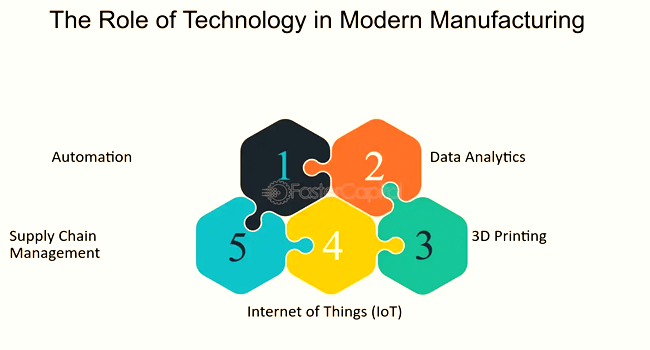
Automation has become a cornerstone of cutting-edge production, transforming conventional techniques and driving performance, excellence, and productiveness to new heights. This technological revolution incorporates various applications, from robot meeting lines to advanced laptop-controlled machining, and its effect is felt throughout industries.
The Evolution of Automation in Manufacturing
Early Automation
The journey of automation in production began in the early 20th century with the appearance of mechanization and the usage of simple machines to carry out repetitive obligations. The creation of assembly lines by Henry Ford in 1913 marked a significant milestone, allowing mass manufacturing and placing the stage for future advancements.
Industrial Automation
In the mid-twentieth century, we noticed the development of more fantastic, sophisticated computerized structures, with the creation of programmable logic controllers (PLCs) and computer numerical management (CNC) machines. This technology enabled more precision and versatility in production processes, paving the manner for the complicated automation structures we see today.
The Digital Revolution
The past due twentieth and early twenty-first centuries have witnessed a virtual revolution, integrating records era and manufacturing tactics. The rise of the Internet of Things (IoT), artificial intelligence (AI), and colossal information analytics has further propelled automation, leading to the technology of clever production.
Types of Automation in Manufacturing
Fixed Automation
Fixed or complex automation entails using a specialized system to carry out precise responsibilities. This sort of automation is suitable for high-volume manufacturing with minimal variation. Examples include car-meeting strains and bottling plant life.
Programmable Automation
Programmable automation is characterized by the capability to reprogram machines to address specific duties. This flexibility makes it appropriate for batch production, wherein products might vary but are produced in large portions. CNC machines and PLCs are typical examples of programmable automation.
Flexible Automation
Flexible automation, or gentle automation, represents the most superior form of automation, allowing for fast adjustments in production without significant downtime. This kind is suitable for custom and small-batch manufacturing. Robotics and automated guided automobiles (AGVs) are critical components of bendy automation systems.
Key Technologies in Modern Manufacturing Automation
Robotics
Robots are pivotal in cutting-edge production, performing obligations from accessible material coping to complex meeting operations. Industrial robots are ready with sensors and AI abilities, allowing them to adapt to converting environments and improve operational efficiency.
Internet of Things (IoT)
The IoT connects machines, sensors, and systems, allowing real-time statistics, trade, and verbal exchange. This connectivity complements visibility and manipulation over production techniques, facilitating predictive protection, quality control, and general operational optimization.
Artificial Intelligence (AI) and Machine Learning
AI and system studying algorithms examine extensive quantities of facts to discover styles and make predictions. In manufacturing, these technologies are used for exceptional manipulation, technique optimization, and demand forecasting, among different packages.
Advanced Analytics
Advanced analytics involves the usage of data evaluation gear and techniques to take advantage of insights from production facts. This allows for improving selection-making, optimizing methods, and improving productivity.
Additive Manufacturing
Additive production, or 3D printing, introduces complicated, customized elements with minimal waste. This technology is revolutionizing prototyping and manufacturing strategies, especially in industries like aerospace and healthcare.
Benefits of Automation in Manufacturing
Increased Efficiency
Automation significantly boosts manufacturing performance by reducing cycle instances and minimizing human intervention. Automated systems can operate constantly, ensuring excessive throughput and steady output.
Improved Quality
Automated tactics are much less prone to errors than guided operations. Precision and repeatability are hallmarks of automation, leading to more exceptional products and reduced defects.
Cost Reduction
Although the initial investment in automation may be high, the lengthy-time period fee savings are enormous. Reduced labor expenses, decreased fabric waste, and elevated manufacturing prices contribute to discounts.
Enhanced Safety
Automation reduces human employees’ desire to perform dangerous responsibilities, thereby improving the place of business protection. Robots and automated structures can take care of risky substances and function in environments that are unsafe for human beings.
Greater Flexibility
Modern automation systems provide excessive ranges of flexibility, allowing manufacturers to quickly adapt to changing market demands. This agility is especially crucial in industries where customization and quick turnaround are essential.
Challenges of Implementing Automation
High Initial Costs
The preliminary investment required for implementing automation can be vast. Buying gadgets, software, and training costs can be a barrier for small and medium-sized businesses (SMEs).
Integration Complexity
Integrating new automation technologies with present structures can be complex and time-consuming. Ensuring compatibility and seamless operation throughout unique platforms and techniques requires cautious plans and execution.
Workforce Impact
Automation can result in activity displacement as machines take over duties historically completed using humans. This necessitates retraining and reskilling packages to help employees adapt to new roles in an automated environment.
Maintenance and Upkeep
Automated systems require everyday upkeep and updates to ensure the most desirable overall performance. Downtime due to protection can affect manufacturing schedules, and specialized know-how is frequently needed to address technical problems.
Future Trends in Manufacturing Automation
Advanced Robotics
The future of manufacturing automation will see the development of more excellent, superior robots with more suitable skills. Collaborative robots, or cobots, could correctly and effectively accompany human beings and have become more regular.
Artificial Intelligence and Machine Learning
AI and system studying will continue evolving, supplying even more profound insights and state-of-the-art automation solutions. Predictive preservation, adaptive manipulation structures, and clever process optimization have become popular.
Edge Computing
Edge computing will allow real-time records processing and evaluation of the supply of records generation. This will reduce latency and enhance the responsiveness of automated structures, leading to extra green and dependable operations.
Digital Twins
Digital twins, digital replicas of physical structures, will become critical to production automation. They allow for simulation, checking out, and optimization of techniques in virtual surroundings before implementing adjustments inside the actual international.
Sustainable Manufacturing
Automation will play a key position in promoting sustainable manufacturing practices. Automated systems can optimize resource utilization, lessen waste, and enhance strength performance, contributing to environmentally friendly manufacturing tactics.
Case Studies in Manufacturing Automation
Automotive Industry
The car enterprise has pioneered the adoption of automation, using robot meeting traces extensively. Companies like Tesla and Toyota have implemented advanced automation systems to beautify production efficiency and quality.
Electronics Manufacturing
Automation is used for precision assembly and checking out, and it is excellent in the electronics industry management. Companies like Samsung and Foxconn rent automatic structures to provide extraordinary electronic components and gadgets at scale.
Aerospace Industry
The aerospace industry leverages automation for aircraft meetings, factor manufacturing, and excellent inspection. Boeing and Airbus use advanced robotics and automated structures to ensure the best safety and performance standards.
Healthcare and Pharmaceuticals
Automation in the healthcare and pharmaceutical industries includes computerized drug production, packaging, and pleasant manipulation. Companies like Pfizer and Johnson & Johnson utilize automation to increase production capability and preserve stringent first-rate standards.
Conclusion
Automation is reshaping the landscape of cutting-edge manufacturing, presenting exceptional benefits in performance and great, as well as price, financial savings. While demanding situations remain, the continued advancement of automation technology guarantees to force in addition innovation and increase. By embracing automation, producers can live aggressively in an increasingly more dynamic and worrying marketplace.